The Whole and the Sum of Its Parts
- Written by: Christian Greuel
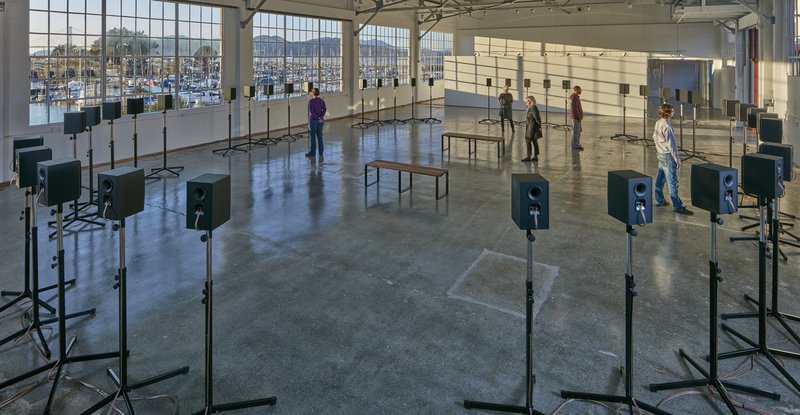
Janet Cardiff's The Forty Part Motet, a rendering of Thomas Tallis' Renaissance masterpiece Spem in alium ("Hope in any other") c. 1570 is nothing short of phenomenal. This polyphonic choral work is of an early music form known as a "motet", in which varied voices play against one another to create a rich tapestric whole. In this case we have a forty part composition, made up of eight separate five-voice choirs. A beautiful work to behold in its own right, it is further enhanced in Cardiff's separation and spatialization of the voices.
The Many Artistic Facets of VR
- Written by: Christian Greuel
The recently concluded North American tour of the VR Film Festival, organized by artist agency Kaleidoscope, showcased a large number of creative works of virtual reality. But it also demonstrated that there are many different facets to this relatively "new" medium.
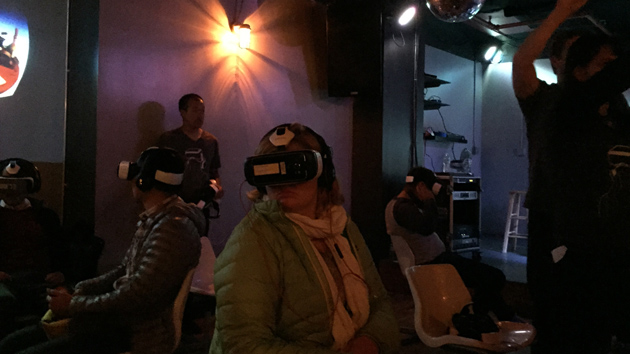
Purists from the earlier wave of VR (1980s-90s) may hold firm to the classic definition of virtual reality as an immersive, navigable, and interactive 3D world. However, the current wave has a new flavor, commonly known as Cinematic 360 (or 360 for short). Essentially this is a spherical video that is projected in virtual space around the viewer to create the illusion of being in a specific location. Think QuickTimeVR with a head-mounted display. The result can be quite effective, with the trade-off being that 360 viewers cannot freely navigate the scene nor can they interact with it. Blasphemy for some, but artistically, it's really just another choice in medium.
Don't be Evil (Waiting for Google)
- Written by: Christian Greuel
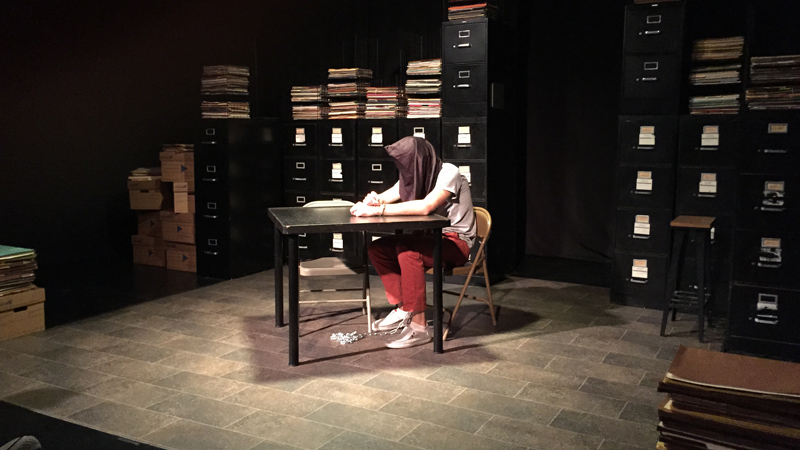 The scene that greets patrons as they enter the theatre to see Don't Be Evil.
Stepping into Virtual Heritage
- Written by: Christian Greuel
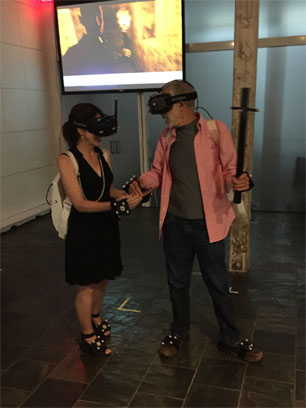
It Takes a Virtual Village
- Written by: Christian Greuel
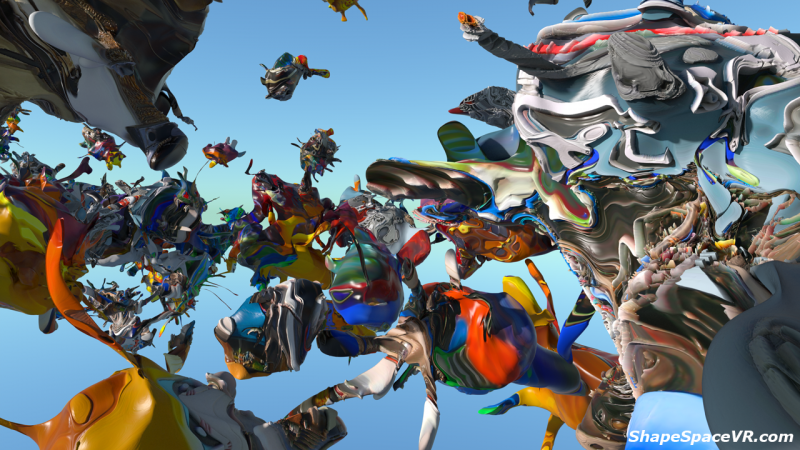
The Sound of Two Hands Sculpting
- Written by: Christian Greuel
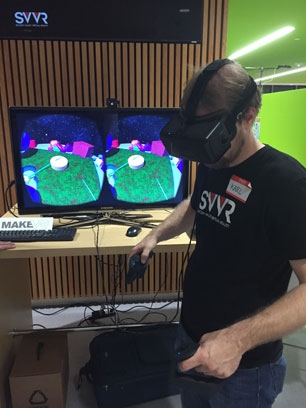
Creating virtual worlds by hand should be as intuitive as stacking Lego bricks, sticking your fingers into clay, or chipping stone with a chisel. Artists should not, as they currently must, be required to take on the steep learning curve of an advanced 3D modeling tool. At the Silicon Valley Virtual Reality (SVVR) meetup this evening, I had the chance to try out a tool called MakeVR, which is currently being developed by Paul Mlyniec with Sixense.
Aesthetics & Tools in the Virtual Environment
- Written by: Christian Greuel

SIGGRAPH, the annual conference of computer graphics and interactive techniques, is featuring virtual reality in a number of venues this year, including the VR Village, an Immersive Realities (AR/VR) Contest, and a handful of panel sessions on the topic.
Virtual reality as a medium of creative expression is thankfully resurgent again, as an increasing number of artists gain access to powerful tools that were once arcane and largely unaffordable. But while the means are becoming available to more people, the same sorts of questions exist today as did during the earlier wave of creative discovery within VR during the early 1990s.
Twenty years ago, at SIGGRAPH 1995, I had the pleasure of moderating a panel of pioneering artists who were then actively producing works using immersive VR. Being the anniversary of that event, I had pulled the proceedings off the shelf and was pleasantly surprised to see how relevant the questions remain even to today’s many artists working in this space.
The panelists’ works are lost to time, except in terms of any documentation collected, in the sense that decades-old technology would be needed to be resurrect them for the audience in 2015. But it is striking how the observations and analytical thinking of these early explorers transcend time. But then again, a key premise of the panel was that the act of creating is practically as old as our species and that the “purpose of the aesthetic action has and always will be to visualize ideas and to explore our environments using whatever devices are available.”